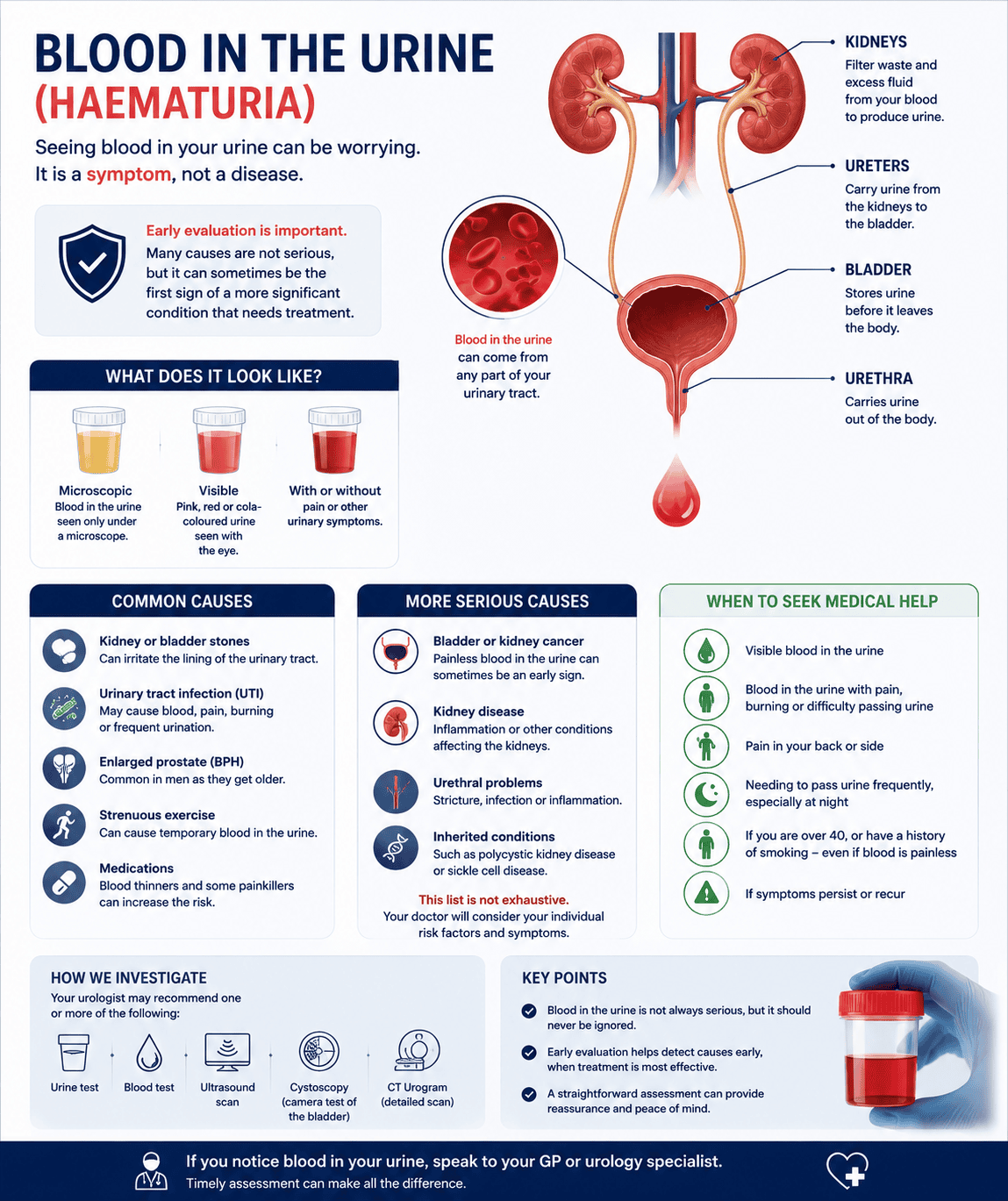
Blood in the urine (haematuria) means red blood cells are present in urine. It can be visible (you can see pink/red or “cola‑colored” urine) or non-visible (only found on a urine test).
Key takeaways
Visible blood in the urine should always be checked by a clinician— even if it goes away.
A dipstick urine test can suggest blood, but it must be confirmed with a urine test under the microscope before doing more testing.
Blood in the urine can have many causes, including urinary tract infection (UTI), kidney stones, prostate problems, and cancer—so the goal is to find the cause and treat it.
When to seek urgent care?
Go to urgent care or the emergency department if you have blood in your urine plus any of the following:
Inability to pass urine (possible blockage from clots)
Large clots or heavy bleeding
Severe flank/back pain (possible stone or kidney problem)
Fever, chills, or feeling very unwell (possible kidney infection)
Dizziness, fainting, chest pain, or shortness of breath
Common causes (and what they may feel like)
UTI (bladder infection): burning with urination, urgency/frequency, lower belly discomfort.
Kidney stone: sudden severe side/back pain, nausea/vomiting, sometimes blood in urine.
Prostate enlargement (in men): weak stream, trouble starting, frequent nighttime urination.
Vigorous exercise, dehydration, or menstrual blood mixing with urine: can cause temporary findings.
Kidney causes (less common but important): may occur with swelling, high blood pressure, foamy urine (protein), or reduced kidney function.
Cancer (bladder/kidney/upper urinary tract): can present as painless visible blood—risk is higher with older age and smoking history.
Tests (investigations) you may need
Your clinician chooses tests based on your age, smoking history, how much blood was seen, and whether it keeps happening (risk-based evaluation)
- Basic urine tests
- Urinalysis (checks for blood, infection signs, and protein)
- Urine culture if infection is suspected (to choose the right antibiotic)
- Blood tests (often done)
- Kidney function blood test (creatinine/eGFR)
- Full blood count (checks for anemia or infection)
- Looking inside the bladder: cystoscopy - cystoscopy is a short procedure where a thin camera looks inside the bladder. It is a key test when cancer needs to be ruled out.
Bladder cancer evaluation commonly starts with cystoscopy, and if something suspicious is seen, a biopsy/removal may be planned.
- Imaging (scans) of the kidneys and ureters. Your team may use one of these:
CT urography (CT urogram): often the preferred scan to check kidneys and ureters when it is safe for you to receive contrast dye.
CT urography is very good at detecting cancers in the upper urinary tract (kidneys/ureters).
Ultrasound: may be used in some people (for example, when CT contrast is not safe).
- Additional tests: Urine cytology (checks for cancer cells). Not everyone needs this test at the start. Some guidelines advise not using urine cytology routinely in the initial evaluation of haematuria. It may be used in selected situations (for example, concern for certain high-grade cancers). When a kidney (medical) cause is suspected/if urine tests show protein, unusual-shaped red cells, casts, or reduced kidney function, you may be referred to a kidney specialist (nephrologist).
Treatment: common causes and what is usually done
Treatment depends on the cause found.
Urinary tract infection (UTI)
Typical clues: burning when urinating, urgency/frequency, smelly urine, sometimes fever.
Treatment: antibiotics based on symptoms and urine culture results.
A repeat urine test is often done after treatment to make sure the blood has cleared.
Kidney stones (urolithiasis)
Typical clues: severe one-sided flank/back pain, nausea/vomiting, sometimes visible blood.
Treatment may include:Pain control and fluids, medicines to help a stone pass (in selected cases), procedures to remove/break the stone if it is large, stuck, causing infection, or damaging the kidney
Enlarged prostate (BPH) in men
Typical clues: weak stream, straining, slow flow, getting up at night to urinate; sometimes bleeding from prostate surface vessels.
Treatment: Medicines to relax the prostate/bladder outlet, or shrink the prostate, procedures/surgery if symptoms are severe or there are complications (for example, urine retention)
Bladder cancer
Typical clue: often painless visible haematuria.
Treatment (depends on stage): If a bladder growth is seen, the usual next step is removal/biopsy through the urethra (TURBT) to confirm diagnosis and guide treatment.
Further treatments may include bladder treatments (intravesical therapy), surgery, chemotherapy, and/or radiation depending on findings.
Cancer of the kidney or ureter (upper-tract urothelial cancer)
Typical clues: haematuria (visible or non-visible), sometimes flank pain.
Treatment: may include ureteroscopy/biopsy, surgery - kidney removal, and sometimes chemotherapy depending on stage.
Kidney (glomerular) inflammation (for example, IgA nephropathy)
Typical clues: haematuria plus protein in urine, high blood pressure, swelling, or reduced kidney function.
Treatment: Often includes blood pressure control and kidney-protective medicines; sometimes immune-suppressing treatment is needed (nephrology-led care).
Blood thinners / antiplatelet medicines
Blood thinners can make bleeding more noticeable, but you still need an evaluation to find the source. Do not stop these medicines on your own—your clinician will advise you.
What happens if all tests are normal?
Many people do not have a dangerous cause found.
Your clinician may recommend follow-up urine testing, and you should return sooner if you develop visible blood, worsening symptoms, or new pain.
Practical tips while you’re being evaluated:
Drink enough fluids unless your doctor has restricted fluids for another reason.
Note what you see: color, clots, pain, fever, timing, recent exercise, and any new medicines.
Seek urgent help if you cannot pass urine or you have fever or severe pain.
This guide is not a substitute for professional medical advice. If symptoms worsen or you have new concerns, contact your doctor or seek emergency care.