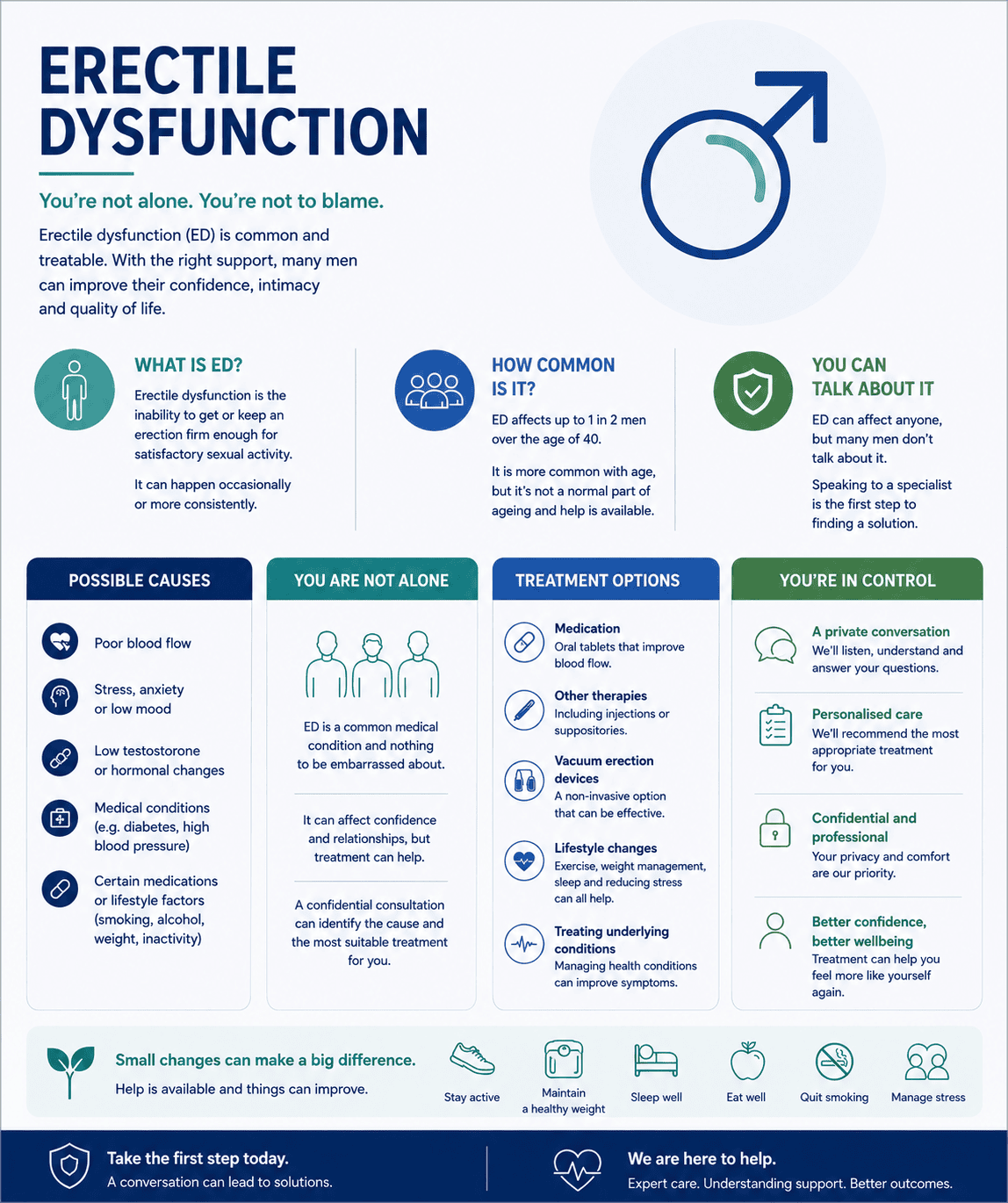
When things don't work quite as they used to - and what you can do about it.
Erectile dysfunction (ED) means trouble getting or keeping an erection firm enough for satisfying sex. ED is common and treatable, and it can also be an early warning sign of health problems like diabetes or heart and blood vessel disease.
Common Causes
ED usually has more than one cause at the same time.
Physical
- Blood flow problems (narrowed arteries/high blood pressure/high cholesterol)
- Diabetes (can affect nerves and blood vessels)
- Obesity and low physical activity
- Smoking, heavy alcohol use, or recreational drugs
- Low testosterone (more often causes low sex drive; it can contribute to ED in some men)
- Sleep apnea
- Nerve conditions (for example after stroke, spinal cord injury, Parkinson’s disease)
Medication-related
- Some antidepressants, certain blood pressure medicines, and opioids can contribute.
Psychological / relationship factors
- Stress, performance anxiety, depression, relationship conflict, past trauma
(Even when ED has a physical cause, stress can make it worse.)
After cancer treatment
- Pelvic surgery or radiation can affect nerves/blood flow and cause ED.
Assessment (What to Expect at a Visit)
A good ED check-up is usually straightforward and private.
1) Questions your clinician may ask
- When it started, whether it’s constant or comes and goes
- Whether you still have morning erections
- Your sex drive, relationship stress, mood, sleep
- Medical history (diabetes, high blood pressure, heart disease)
- All medications/supplements
2) Physical exam
- Blood pressure, weight/waist size
- Heart and circulation check
- Genital exam (and sometimes a brief prostate exam depending on age/symptoms)
3) Common blood tests
Often include:
- Blood sugar testing (fasting glucose and/or HbA1c)
- Cholesterol/lipid panel
- Early-morning testosterone (often checked in men newly presenting with ED, or if low sex drive is a concern)
(If testosterone is low, your clinician may order follow-up hormone tests to find the cause.)
Treatment Options
Treatment is usually step-by-step, based on what matters most to you (speed, convenience, side effects, and cost).
1) Lifestyle and health fixes (help ED and overall health)
- Increase physical activity, improve sleep, manage stress
- Weight loss if needed
- Stop smoking; reduce alcohol
- Control blood pressure, diabetes, and cholesterol
These changes can improve erections and also reduce heart risk.
2) Oral ED medications (often first choice)
PDE5 inhibitors (examples: sildenafil, tadalafil, vardenafil, avanafil) help increase blood flow to the penis.
- They require sexual stimulation to work.
- If one doesn’t work, your clinician may adjust the dose, timing, or try a different one.
- Important safety rule: Do not take these medicines if you use nitrates (like nitroglycerin) because the combination can cause a dangerous drop in blood pressure.
3) Sex therapy / counseling (very helpful for many men)
- Helps with performance anxiety, depression, stress, relationship issues
- Often works best together with medical treatment
4) Devices or local treatments (when pills don’t work or aren’t safe)
- Vacuum erection device (VED): a cylinder creates a vacuum to draw blood in, with a ring to maintain firmness.
- Penile injections (medicine injected into the side of the penis before sex)
- Urethral medication (medicine placed in the urethra)
5) Surgery (for men who don’t respond to other options)
- Penile implant (prosthesis): reliable option when other treatments fail.
Testosterone and Men’s Health
Testosterone is not a “universal fix” for ED. It helps most when a man has both:
1. symptoms (often low sex drive, low energy, reduced morning erections), and
2. confirmed low testosterone on early-morning blood tests.
Key points
- Testosterone treatment may improve sexual symptoms in men with proven low testosterone, but the improvement in erections is often modest, and many men still need ED medication.
- Testosterone should not be used if you are trying to conceive, because it can lower sperm production.
- Testosterone is not recommended in certain conditions (your clinician will review this), including situations where prostate cancer risk needs evaluation and some serious untreated medical issues (like severe sleep apnea or high haematocrit—too many red blood cells).
When Should I See a Urologist?
Consider urology referral if:
- ED treatment pills don’t work after correct use and dose adjustments
- You have penile curvature or pain (possible Peyronie’s disease)
- You want second-line therapies (injections, urethral therapy) or a device plan
- You are interested in a penile implant
- You have low testosterone that needs specialised evaluation, especially if fertility is a goal
- ED occurs after pelvic surgery, radiation, spinal cord injury, or complex neurologic disease
- You have severe symptoms, complicated medical conditions, or you want more advanced testing (like penile Doppler ultrasound)
Frequently Asked Questions (FAQs)
1) Is ED “all in my head”?
Not usually. ED is often related to blood flow, nerves, hormones, medications, or health conditions. Stress and anxiety can still play a big role, even when there is a physical cause.
2) Can ED be an early sign of heart disease or diabetes?
Yes. ED can be an early warning sign of blood vessel disease. That’s why checking blood pressure, cholesterol, and blood sugar is important.
3) My pills didn’t work—does that mean nothing will?
No. Many “failures” are from the wrong dose, wrong timing, not enough sexual stimulation, heavy meals/alcohol (for some pills), or not trying enough times. If pills truly aren’t effective, other very effective options exist (vacuum device, injections, implants).
4) Do ED medications cause an erection right away?
They make it easier to get an erection with sexual stimulation. They don’t usually work like an “on switch,” and timing depends on the specific medication.
5) Is it safe to buy ED meds online?
It’s safest to use medication prescribed by a clinician and filled at a licensed pharmacy.
6) When is ED an emergency?
Go to A&E if:
- You have chest pain or feel faint during sex
- You get an erection lasting more than 4 hours (priapism), especially after an injection treatment
- You have a severe allergic reaction (rare)
This guide is not a substitute for professional medical advice. If symptoms worsen or you have new concerns, contact your doctor or seek emergency care.