What are kidney stones?
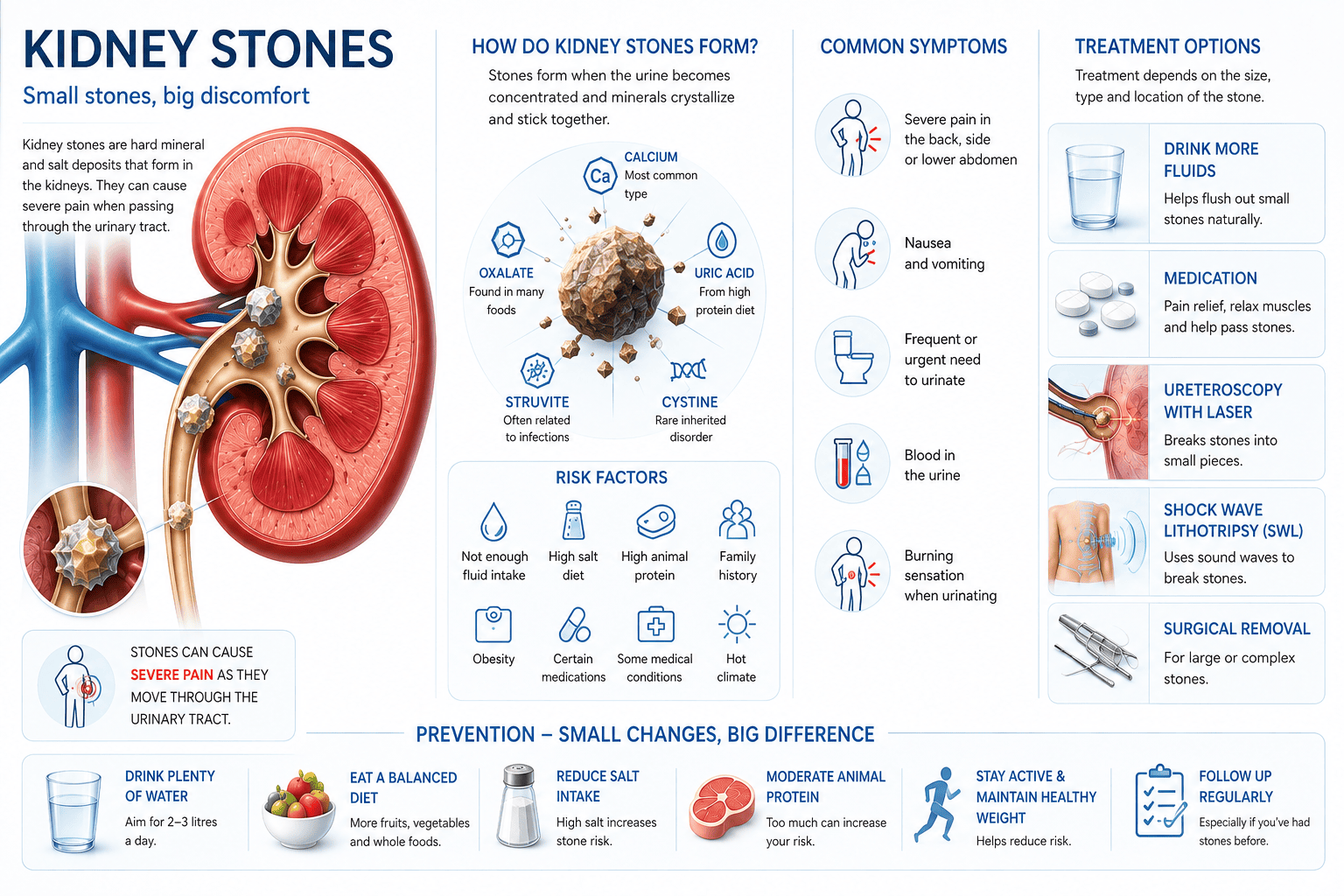
Kidney stones are hard “crystals” that form inside the kidneys from minerals and salts in the urine. A stone can stay in the kidney or move into the tube that drains urine to the bladder (the ureter). When a stone blocks the urine flow, it can cause severe pain (“renal colic”).
Common symptoms
You may have one or more of these:
- Sudden, severe pain in the side/back (flank), often coming in waves; it may move toward the lower belly or groin as the stone moves.
- Blood in the urine (pink, red, brown, or only seen on a urine test).
- Nausea and vomiting.
- Burning with urination, needing to urinate often/urgently.
Seek emergency care if you have:
- Fever, chills, or feeling very unwell (can mean infection with blockage—an emergency).
- Severe pain not controlled with medication.
- Trouble passing urine, very little urine, or you have only one working kidney.
- Pregnancy with suspected kidney stone symptoms (needs urgent medical evaluation).
How kidney stones are diagnosed
Diagnosis usually includes your symptoms plus urine tests and imaging.
Tests: you may get urine test (urinalysis): looks for blood, infection signs, and urine pH (how acidic/alkaline the urine is).
Imaging: (pictures of the kidneys/ureters):
- CT scan without contrast (low-dose CT): often the most accurate test for adults.
- Ultrasound: often used first in pregnancy or children to avoid radiation.
If you pass a stone, your healthcare team may ask you to save the stone so it can be tested for its type—this can help prevent future stones.
Treatment: what to expect
Treatment depends on stone size, location, your symptoms, and whether there is infection or blockage.
- Pain control (most important first step) Anti-inflammatory pain medicine (NSAIDs) (if safe for you) is usually first choice for kidney stone pain.
If NSAIDs aren’t safe or don’t work enough, other options may include IV/oral acetaminophen (paracetamol) and sometimes opioids.
- Letting the stone pass (watchful waiting). Many stones can pass on their own, especially smaller ones, as long as pain is controlled and there are no complications.
- Medical expulsive therapy (MET):
For some ureteral stones, especially distal (lower) ureter, stones <10 mm, your clinician may prescribe an alpha-blocker (often tamsulosin) to help the stone pass.
- A procedure may be recommended if the stone is unlikely to pass, pain remains intolerable, there is blockage harming the kidney, or there are repeated infections. These include insertion of a JJ stent or placement of a nephrostomy.
A nephrostomy is a small tube placed through the skin in your back/side directly into the kidney, using ultrasound/X‑ray guidance, so urine drains into an external bag
Common procedures to managed stones include:
- Shock wave lithotripsy (SWL/ESWL): uses shock waves to break the stone into smaller pieces that can pass.
- Ureteroscopy (URS): a small camera is passed through the bladder into the ureter; the stone is removed or broken up with a laser.
- Percutaneous nephrolithotomy (PCNL): used mainly for large kidney stones; the stone is removed through a small incision in the back.
Preventing future stones (recurrence prevention)
After a stone episode, prevention is important because stones can recur.
General prevention steps (good for most stone types):
Drink enough fluids to make a high urine output (your urine should be pale yellow most of the day).
Lower salt (sodium) intake.
Do not stop calcium foods unless your clinician tells you to (many people should keep normal dietary calcium).
If you get recurrent stones or are at higher risk, your clinician may order blood tests and 24-hour urine collections to personalize prevention, and may recommend specific medications (for example, potassium citrate or thiazide medicines in selected people).
What you can do at home (if your clinician says it’s safe)?
Take pain medicine exactly as prescribed.
Drink fluids (unless you were told to restrict fluids for another condition).
Use a urine strainer to catch the stone if it passes.
Keep your follow-up appointment—especially if you still have pain, haven’t passed the stone, or symptoms return.
This guide is not a substitute for professional medical advice. If symptoms worsen or you have new concerns, contact your doctor or seek emergency care.
Frequently asked questions (FAQs):
How much water should I drink to help prevent kidney stones?
Aim for enough fluids to make at least 2.5 liters of urine each day. This usually means drinking about 2.5–3 liters of water (or other fluids) per day, spread out through the day.
Tips that help:
•Spread fluids throughout the day, not just all at once.
•Drink extra in hot weather, during exercise, or if you’re sweating (you lose more water and your urine gets more concentrated).
•A simple check: your urine should usually be pale yellow (dark yellow often means you need more fluids).
When to call your doctor urgently: fever/chills, vomiting you can’t stop, severe worsening pain, trouble urinating, or you feel very unwell (these can be signs of infection or blockage).
This guide is not a substitute for professional medical advice. If symptoms worsen or you have new concerns, contact your doctor or seek emergency care.