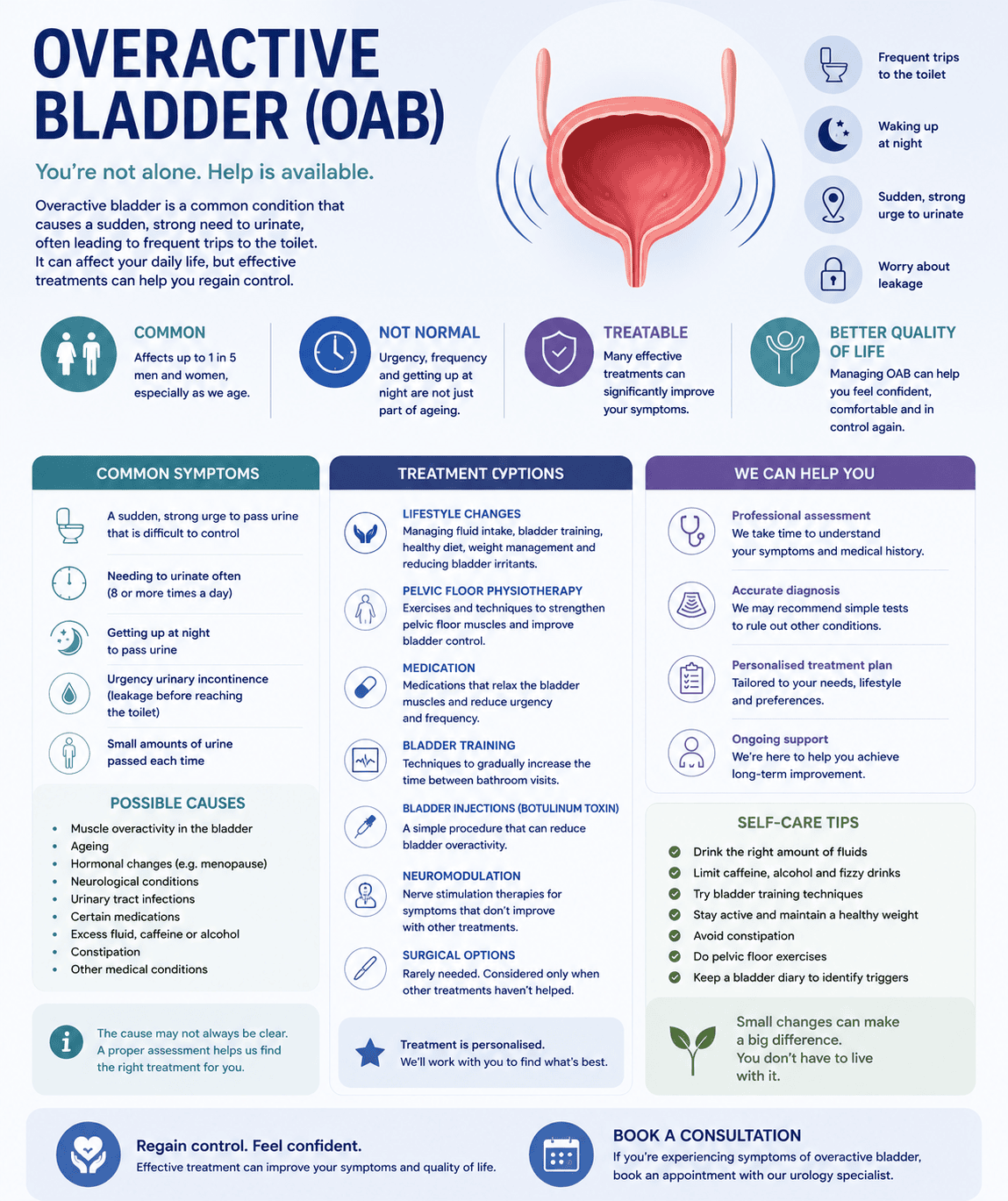
Overactive bladder (OAB) is a common condition where you feel a sudden, hard-to-hold urge to pass urine, often with peeing more often (day and night), and sometimes with leakage before you reach the toilet. It is diagnosed when these symptoms happen without a urine infection or another obvious cause.
Symptoms
OAB symptoms can include:
-Urgency: a sudden, strong need to pee that is difficult to delay.
-Frequency: peeing more often than you want to.
-Nocturia: waking from sleep to pee (one or more times).
-Urgency urinary incontinence: leaking urine along with the strong urge.
Get urgent medical care if you have fever, flank/back pain, vomiting, feel very unwell, or cannot pass urine.
Causes
For many people, there is no single clear cause (this is often called idiopathic OAB). OAB is thought to be multifactorial, meaning several things can contribute.
Things that can worsen urgency and frequency include:
-Constipation.
-Caffeine and alcohol (can irritate the bladder for some people).
-Diuretics (“water tablets”) and some diabetes medicines that increase sugar in urine.
-Being overweight, diabetes, and other health issues that can affect bladder symptoms.
In some people, bladder symptoms can be related to neurologic conditions (for example Parkinson’s disease), which is assessed differently than idiopathic OAB.
Assessment (What to Expect at Your Appointment)
Diagnosis is usually made with basic checks, not complex tests at the start.
Common first steps:
History (your story): what symptoms you have, how long they’ve been going on, how much they affect daily life, fluid/caffeine intake, constipation, medicines, and any trouble emptying the bladder.
Physical exam (in person).
Urine test (urinalysis) to check for infection or blood in the urine.
If the urine test suggests infection, a urine culture may be done.
Sometimes your clinician may also suggest:
A bladder diary (tracking drinks and toilet visits for 2–3 days) to measure frequency, volumes, leakage, and nighttime peeing patterns.
Checking post-void residual (PVR) (how much urine is left after you pee), especially if there are symptoms of incomplete emptying or before certain treatments.
More advanced tests (like bladder camera tests or urodynamics) are usually reserved for unclear cases or if symptoms do not improve with treatment.
Treatment Options
Treatment is chosen with shared decision-making—your goals and preferences matter, and it’s okay to start simple or to wait.
1. Lifestyle and bladder training (often the starting point) These options are safe and can help many people:
Bladder training (gradually lengthening time between toilet visits) is recommended for all OAB patients.
Behavior changes such as fluid timing, reducing bladder irritants like caffeine/alcohol, and managing constipation.
Pelvic floor muscle training/physiotherapy can help some people control urgency and leakage.
2. Medicines : If symptoms are still bothersome, medicines can reduce urgency and leakage:
Antimuscarinic medicines (also called anticholinergics). They can work well but may cause side effects like dry mouth and constipation, and your clinician may discuss possible memory/cognition risks in older adults.
Beta-3 agonist medicines (for example mirabegron). These also improve symptoms and are an alternative to antimuscarinics.
If one medicine is not enough, a combination (one from each class) may be considered.
3. Minimally invasive options (procedures) These can be offered if symptoms are still bothersome, or you prefer to avoid long-term medication, or medicines are not safe for you or cause side effects.
Options include:
-Tibial nerve stimulation (nerve stimulation near the ankle).
-Sacral neuromodulation (a small implanted device that helps control bladder signals).
-Bladder botulinum toxin (Botox) injections.
Frequently Asked Questions FAQs
- Is OAB the same as a UTI?
No. A UTI is an infection. OAB is a symptom condition diagnosed after infection is ruled out with a urine test.
- Is OAB dangerous?
OAB is usually not dangerous, but it can seriously affect sleep, work, travel, exercise, and confidence. If symptoms are new or severe, testing is important to rule out other causes.
- Will I need a cystoscopy or urodynamics?
Often not at the start. These tests may be considered if the diagnosis is unclear or if symptoms do not improve with treatment.
- What if my main problem is waking at night to pee?
Nighttime peeing can have different causes (not always OAB). A bladder diary can help your clinician tell whether you are making too much urine at night or whether your bladder is overactive.
- If Botox works, do I keep taking my bladder medicines?
If a minimally invasive treatment (like Botox) works well, your clinician may stop oral OAB medicines and restart them later only if symptoms return.
This guide is not a substitute for professional medical advice. If symptoms worsen or you have new concerns, contact your doctor or seek emergency care.