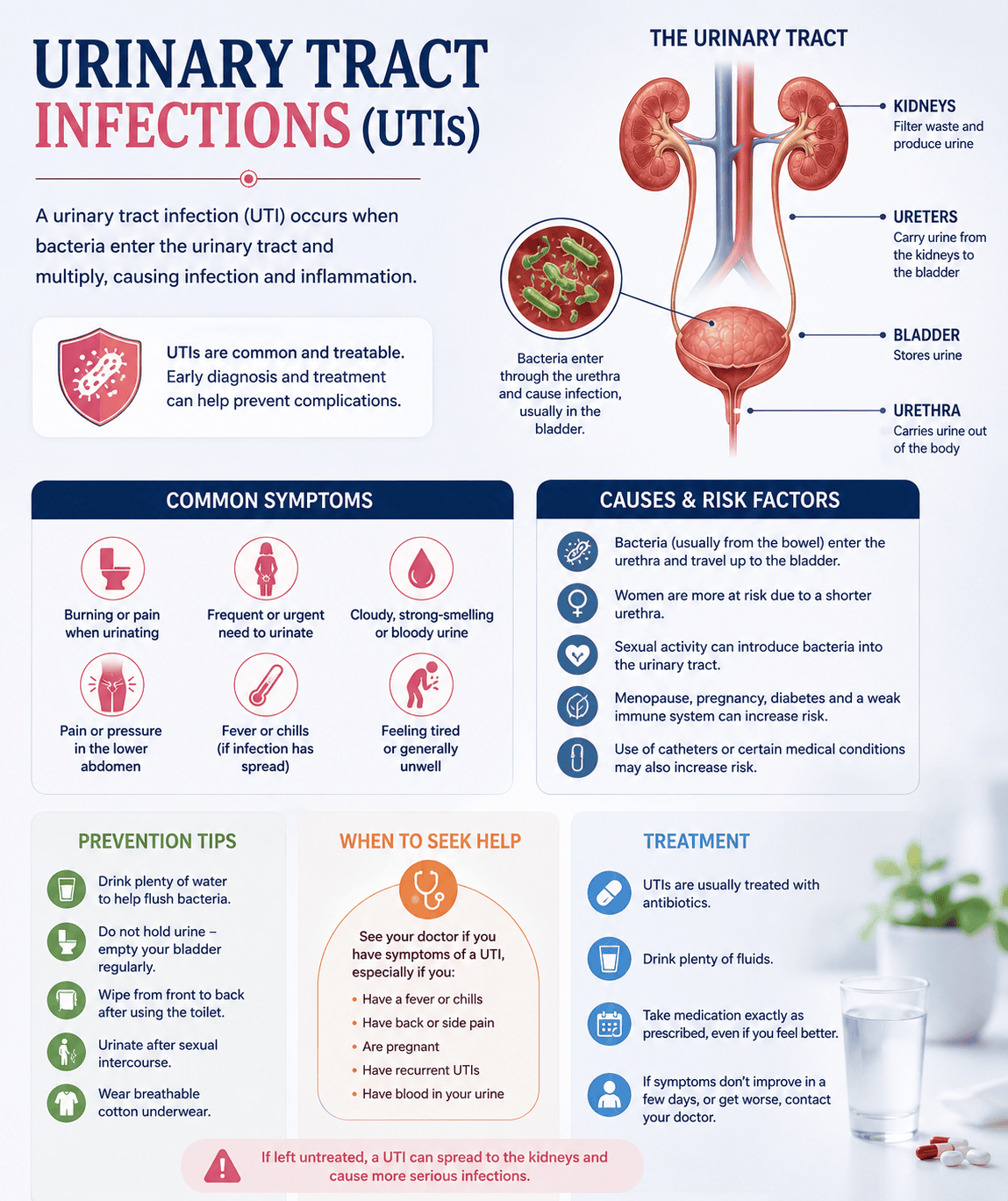
A recurrent UTI means you keep getting bladder infections that come back after you fully got better from the last one. Most guidelines define recurrent UTI as either 2 UTIs within 6 months or 3 UTIs within 1 year.
A UTI should be diagnosed based on symptoms plus a urine test (especially a urine culture)—not just a urine test alone.
Symptoms
- Burning or pain when you pee (dysuria)
- Needing to pee often and/or urgently
- Passing only small amounts
- Lower belly (suprapubic) discomfort
- Blood in the urine (can happen)
Symptoms that may mean the infection is more serious (possible kidney infection or “complicated” UTI) include:
- Fever or chills
- Flank/back pain (pain near the kidneys)
- Nausea/vomiting
- Feeling very unwell
Why Do UTIs Keep Coming Back?
Most recurrent UTIs are due to a new infection (reinfection) rather than one infection that never went away. Some people also have a “hidden source” that keeps seeding bacteria (a relapse).
Common reasons UTIs recur include:
Bacteria re-entering the bladder from nearby areas (vaginal/skin or bowel bacteria), which can happen more easily in women because the urethra is shorter.
Sex-related triggers, especially more frequent intercourse and use of spermicides (sperm-killing products).
Menopause-related changes: lower estrogen can change the vaginal tissues and “good bacteria,” making infection more likely.
Not emptying the bladder fully (urine left behind can allow bacteria to grow).
Bladder or urinary tract problems (less common, but important): stones, blockage, diverticula (pouches), fistula (abnormal connection), or bladder dysfunction.
Antibiotic overuse or treating when you don’t have true UTI symptoms can disrupt the normal microbiome and may contribute to ongoing problems.
When Is Urological Assessment Needed?
Many women with recurrent uncomplicated UTIs do not need routine cystoscopy (a camera test) or routine scans.
A urology assessment is more likely to be needed if:
You have fever, flank pain, or feel systemically unwell with infections (possible kidney infection/complicated UTI).
Symptoms don’t improve with the right antibiotic treatment, or they return very quickly.
UTIs are repeatedly caused by Proteus mirabilis (a bacteria linked with stones).
You have blood in the urine that continues after the infection clears.
You may not be emptying your bladder well.
Investigations (Tests You May Need)
During a UTI episode (when you have symptoms): Urinalysis and urine culture before antibiotics, whenever possible.
If the sample looks contaminated, the test may need repeating;
Your clinician may consider:
- Pelvic exam (for example, to check for vaginal tissue changes from menopause or pelvic organ prolapse).
- Bladder emptying check (post-void residual / PVR) using a bladder scan.
- Imaging (ultrasound or CT) if there are risk factors for a complicated cause (like stones or blockage). In uncomplicated recurrent UTIs, routine imaging is usually not needed.
Treatment and Prevention
Treating an episode (when symptoms are present).
Your clinician will usually choose a first-line antibiotic based on local resistance patterns and your prior cultures (common options include nitrofurantoin, trimethoprim, or fosfomycin).
Courses are typically kept as short as reasonable—usually no longer than 7 days for bladder infections in this setting.
Do not treat “asymptomatic bacteriuria” (bacteria in the urine without UTI symptoms) in most nonpregnant adults—this usually causes more harm than good. Non-antibiotic prevention: Vaginal oestrogen (for peri- and post-menopausal women without a reason to avoid estrogen) can reduce future UTIs.
Methenamine hippurate is an antibiotic-sparing option many guidelines recommend for prevention in appropriate patients.
Antibiotic prevention (when needed) :If UTIs keep happening despite other steps, your clinician may discuss:
Preventive antibiotics (either daily for a period of time or related to sex if UTIs are sex-triggered). This can work while you take it, but it also has downsides (side effects, resistance).
Frequently Asked Questions (FAQ)
- Does a high bacteria count in my urine always mean I need antibiotics? No. Bacteria in the urine without UTI symptoms is common and usually should not be treated in nonpregnant adults.
- If my urine looks cloudy or smells bad, is that a UTI? Not always. Cloudy or strong-smelling urine can happen for many reasons. A true UTI diagnosis is based on symptoms plus urine testing.
- Do I need a scan or cystoscopy because I’ve had recurrent UTIs? Often no, especially if you are otherwise healthy and your infections respond normally to treatment. Extra tests are usually reserved for people with warning signs or suspected complicated causes.
- Should I get a urine culture every time? For recurrent UTIs, many guidelines recommend getting a urine culture before antibiotics when you have symptoms (when feasible), because it helps confirm infection and choose the best antibiotic.
- What can I do right now to lower my risk? Common starting points include:
- Ask your clinician whether vaginal oestrogen is appropriate (if peri/post-menopausal).
- Discuss methenamine hippurate as a prevention option.
- Try increasing daily water intake if you don’t have a medical reason to limit fluids.
- If UTIs seem linked to sex, talk to your clinician about prevention strategies (including avoiding spermicides and considering targeted prevention).
Seek urgent medical care if you have fever, chills, flank/back pain, vomiting, are pregnant, or feel very unwell.
This guide is not a substitute for professional medical advice. If symptoms worsen or you have new concerns, contact your doctor or seek emergency care.